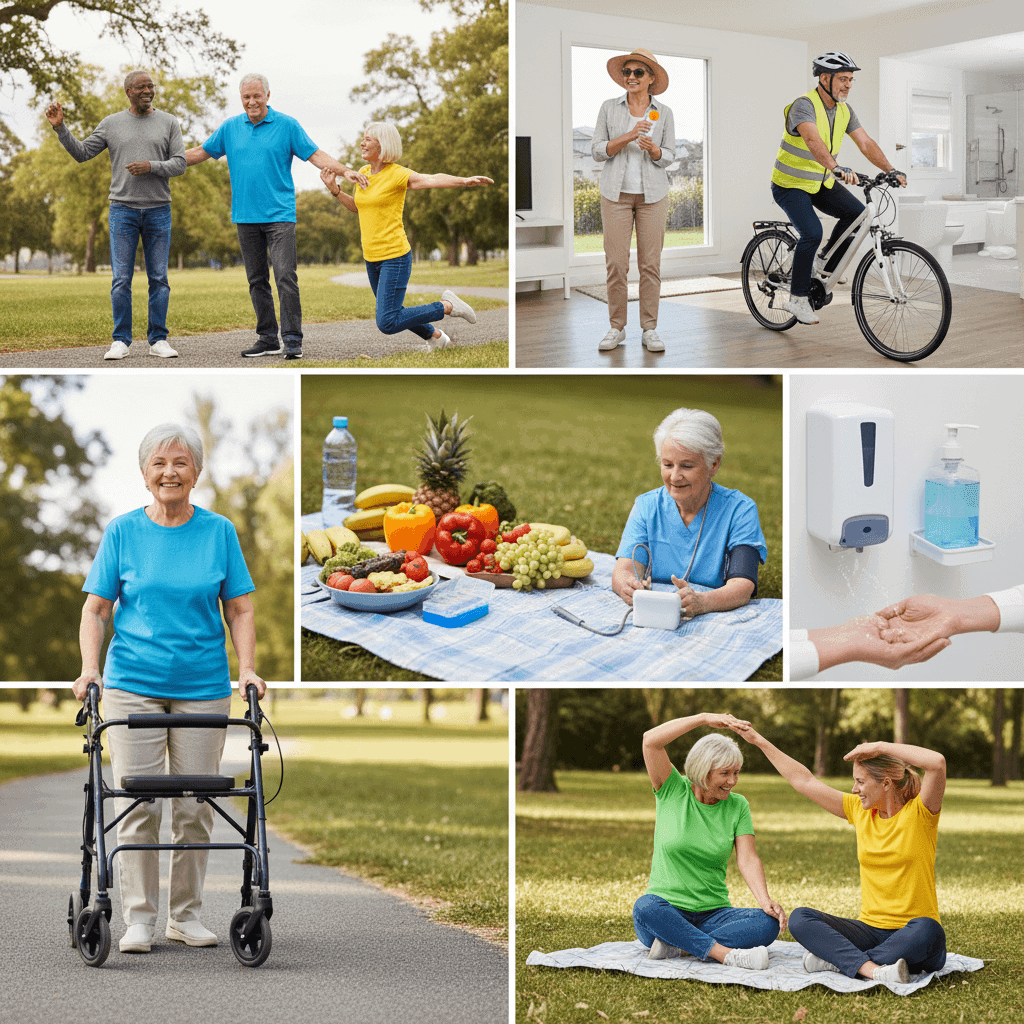
Healthy living for older adults depends on everyday choices that reduce risk and support independence. Small changes to the home and daily routines can cut the likelihood of falls, medication errors, dehydration, and other common problems. This article lays out practical actions that family members and older adults can take now to protect health and make daily life easier.
If you want a quick checklist to share with a loved one or a caregiver, this page brings together clear steps and realistic examples to help plan next actions. For more reading from a reliable source on practical care, see these expert tips for senior safety.
Home fall prevention strategies that reduce risk for seniors
Falls are a top cause of injury among older adults. A focused review of the home is a cost effective first step. Walk each hallway and room during daylight and note hazards. Common fixes include removing loose rugs, rearranging furniture to widen paths, and adding non slip mats in wet areas.
Install grab bars near the toilet and in the shower. These anchor points offer support during transfers. Place frequently used items within easy reach to avoid step stool use. Keep cords and clutter away from walking paths and secure loose carpeting with double sided tape or tacks.
Lighting and flooring tips
Bright, consistent lighting reduces trip risk. Replace weak bulbs and add night lights in high traffic areas like the bedroom and bathroom. Contrast in flooring can create visual confusion for some people with vision loss so choose consistent flooring across connected rooms when possible.
Footwear and foot care
Supportive, well fitting shoes with nonslip soles dramatically lower fall risk. Avoid slippers with soft soles that slide. For those with foot pain or deformity, a visit to a podiatrist can identify shoe recommendations that improve balance and comfort.
Medication management methods to prevent errors
Medication problems can lead to confusion, dizziness, and serious interactions. Begin with an up to date list of all prescriptions, over the counter medicines, vitamins, and supplements. Bring that list to every provider visit for review.
Use a pill organizer labeled by day and time or set an alarm on a phone to keep schedules consistent. Pharmacies often provide blister packaging that separates doses and cuts the chance of taking double doses. For anyone with complex regimens, a pharmacist consultation can pinpoint interactions and simpler alternatives.
Practical tips for caregivers
- Keep medications in a single, cool dry cabinet away from the bathroom where humidity can affect some drugs.
- Cross reference refill dates with a calendar to avoid missed doses.
- Record any side effects such as increased drowsiness, balance change, or appetite shifts and report them to the prescriber.
Balance and strength routines that support independent movement
Maintaining muscle strength and balance reduces the chance of falls and helps with everyday tasks. Simple routines can be done at home with no equipment. Aim for short sessions most days rather than rare long workouts. Examples include standing heel raises while holding a chair and seated leg extensions.
Progress slowly. Start with 5 to 10 minutes and add repetitions over weeks. Balance work can include standing on one foot near a sturdy surface for support for 10 to 20 seconds then switching sides. For those with limited mobility, chair based exercises are valuable and safe.
When to seek professional guidance
If there is a history of falls, dizziness, or heart disease get a physical therapy evaluation. A therapist can prescribe a tailored program and correct technique to lower injury risk. Community senior centers often offer group classes that encourage adherence and social contact.
Nutrition and hydration advice for longevity and energy
Good nutrition supports strength, wound healing, and immune function. Focus on balanced meals containing protein to preserve muscle mass, fiber rich carbohydrates for steady energy, and healthy fats for brain health. Include colorful fruits and vegetables to cover a range of vitamins and minerals.
Hydration is often overlooked. Thirst sensation lessens with age so set a fluid goal and sip throughout the day. Water, herbal tea, and soups count toward intake. Limit drinks with high added sugar. If fluid restrictions exist for kidney or heart conditions talk with the treating clinician about safe goals.
Vision and hearing care to prevent accidents and isolation
Regular screenings for vision and hearing reduce the chance that sensory loss will lead to injury or reduced social contact. Corrective lenses and hearing aids can restore function but they require maintenance. Clean devices according to manufacturer guidance and replace batteries regularly or schedule battery refreshes.
Good lighting and large print materials help those with low vision remain engaged. For hearing loss, environmental changes such as reducing background noise and facing listeners when speaking improve communication.
Safe mobility and transportation options for continued freedom
Driving status should be reviewed periodically with a clinician when reaction time, vision, or strength decline. When driving is no longer safe, plan alternative transportation options in advance. Community shuttles, ride share services that offer assistance to older riders, and volunteer driving programs provide ways to keep appointments and social activities.
When using mobility aids like canes or walkers make sure they are properly sized. A simple test for a cane is that the elbow should bend about 20 degrees when the hand grips the cane while standing upright. An occupational therapist can perform a mobility assessment and recommend changes to increase safety at home and in the community.
Emergency planning and useful technology for quick help
Having a plan for emergencies reduces panic and improves response. Keep a list of key phone numbers near every phone and in a wallet or phone contact labeled ICE for in case of emergency. Share an emergency plan with close contacts and practice it so everyone knows where to find medical records and critical meds.
Personal alarm systems with fall detection and two way communication can be valuable for those who live alone. Wearable pendants or watch based devices connect to monitoring centers or configured contacts. Choose a device that has long battery life and a simple interface to match the user preference.
Creating a safer environment and more resilient routines is a step by step process. Start by picking one or two changes that are realistic this week and build from there. Regular follow up with health professionals keeps the plan aligned with changing needs.
In summary the path to healthier, safer living for older adults is practical and manageable. Focus on reducing fall hazards at home, simplifying medication routines, and keeping up with vision, hearing, and physical activity. Nourishing meals and steady hydration maintain strength and cognitive clarity. Transportation alternatives and emergency planning maintain independence and reduce stress for everyone involved. Try one new habit now such as a short balance routine after breakfast or a medication checklist on the fridge. Small, consistent steps lead to measurable improvements over months. If you care for an older adult make a shared plan and schedule a single follow up task this week like a medication review or a home safety walk through. Taking action keeps life safer and more satisfying for older people and their families.

RELATED ARTICLES